


I have been working with a new writer on a project about economic sovereignty, and while I will share more in the coming months, I cannot resist returning to something I wrote about a few months ago: predicting the future. Very few mean it literally, but far more act on their predictions anyway. Who gets to determine the future? How can we get there? Does everyone have the same access to it?
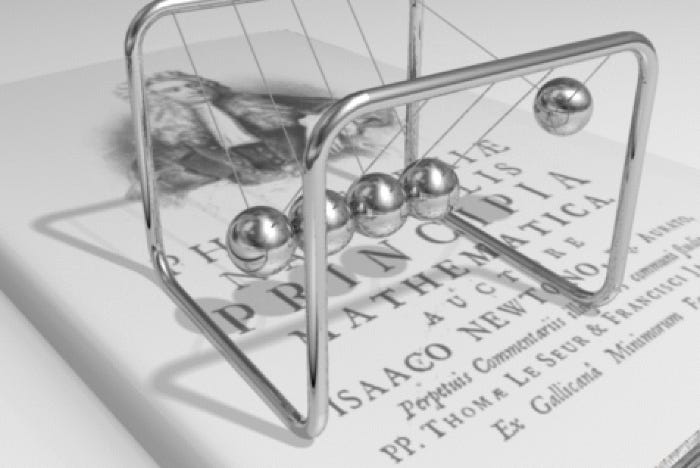
It is far too often a cliche — whether true or not — to claim that life’s actions will occur to you, and then you will simply respond. One ball will swing one way, and your ball will respond the other way.
It is also far too often a cliche to say, and almost certainly true, that life’s actions will occur to you and that you have little to no control over them. That some balls were always going to swing one way, and yours would always have to retaliate back at them.
But life is not Newton’s cradle. Sovereignty, whether economic or personal or moral, does not oscillate itself to an equilibrium. There are people who will be better off than others regardless of their actions. There are those who believe their morals will be vindicated, regardless of their consequences.
Our Newton’s cradle, rather, is not determined by us: someone is watching the swing. The future is not something that happens to us or something we answer; it is something owned, and it belongs to whoever is best at predicting what we will do next. However unpredictable we may think we are, every motion we make eventually swings back to benefit those who have invested in us. It may even begin to resemble a community in that way: reciprocal actions for reciprocal benefits.
This work may not settle the perennial problem of economic sovereignty, nor will it stop the cradles of markets from swinging. The heroes of our favorite films and novels get their equilibrium. The story closes, and the balls come to rest. Everyone loves a bookend.