


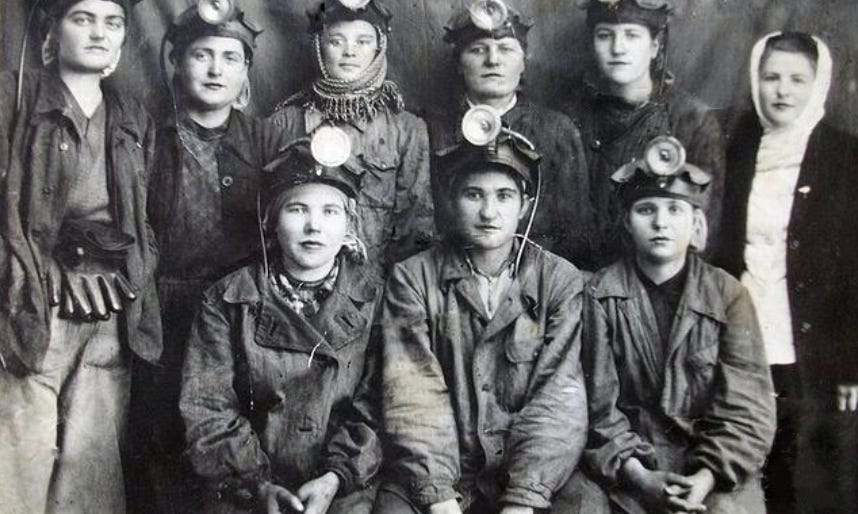
There’s a town in Emile Zola’s Germinal which houses all of the novel’s miners. Themselves, their families, their friends, their ancestors, all living door-to-door with one another. All privacy invaded for the sake of proximity.
All residents of this town wake up at the same time. They all get ready at the same time, brew their watered-down coffee at the same time, and head to work at the same time.
Their days look awfully similar to cultural critic, writer, and essayist Tom Joad’s. Having retired after a career in personal finance (though not without its forays into blogging), Joad enjoys his days of monotony. Wake up, brew coffee, light a cigar, and watch the smoke ripple through layers of the Nebraska air, lining both his eyes and mind before dropping the grandkids off at school.
Joad’s work, which has amassed thousands of followers across platforms, lives within this monotony. It thrives within the routines, the rituals of a country he finds hard to describe. A country he finds has learned from its mistakes, but refuses to move on. A country that has failed not only himself, but his children, his grandchildren, his family for generations to come.
Writers often romanticize isolation. It’s hard to tell when that point begins, when isolation shifts from a burden to a gift, from a suffering to a character trait. What Joad understands about isolation, what he lives through isolation, is different: that solitude is not an aesthetic but a vantage point. A place from which the country’s patterns become visible — cyclical, predictable, and, in their own brutal way, intentional. America learns quickly; it simply chooses not to change. The refusal, too, has its rhythm.
All residents of Zola’s town suffer inhumane working conditions, insufferable leadership, and exploitation at the hand of extra coal, of an extra dollar. What makes that town remarkable is not its misery but its repetition — the sense that every life is built from the same motions, the same debts, the same small hopes pinned to a payday that never quite arrives. The miners live in rows of identical houses, rise at identical hours, descend into identical tunnels. Their lives are separate only in name; in practice, they move as a single organism shaped entirely by forces above them.
Joad’s essays move through these realities without dramatizing them. He reports from the vantage point of someone who has lived among the people he writes for, someone who still answers emails from readers choosing between groceries and prescriptions.
And it’s from this vantage point — clear-eyed, unadorned, unhurried — that his routines make sense. The simplicity is not retreat but calibration, a way to stay close to the world he chronicles. A day measured in small rituals creates the quiet necessary to see what the country refuses to look at directly.
Coffee, cigars, grandkids, whiskey, work.
Small, indefinite, almost stubborn routines that refuse to fade away with time.
Tom Joad is undoubtedly one of the most gifted writers on Substack. If you haven't checked out his book, 9 Miles, you definitely need to.