


I was very surprised to learn the other day that Hasbro still makes Chutes and Ladders. The game of a childhood, of time both well-spent and wasted, where one’s player moves up the board at a dice roll only to be met with (un)expected obstacles to send them perhaps even further back than where they started.
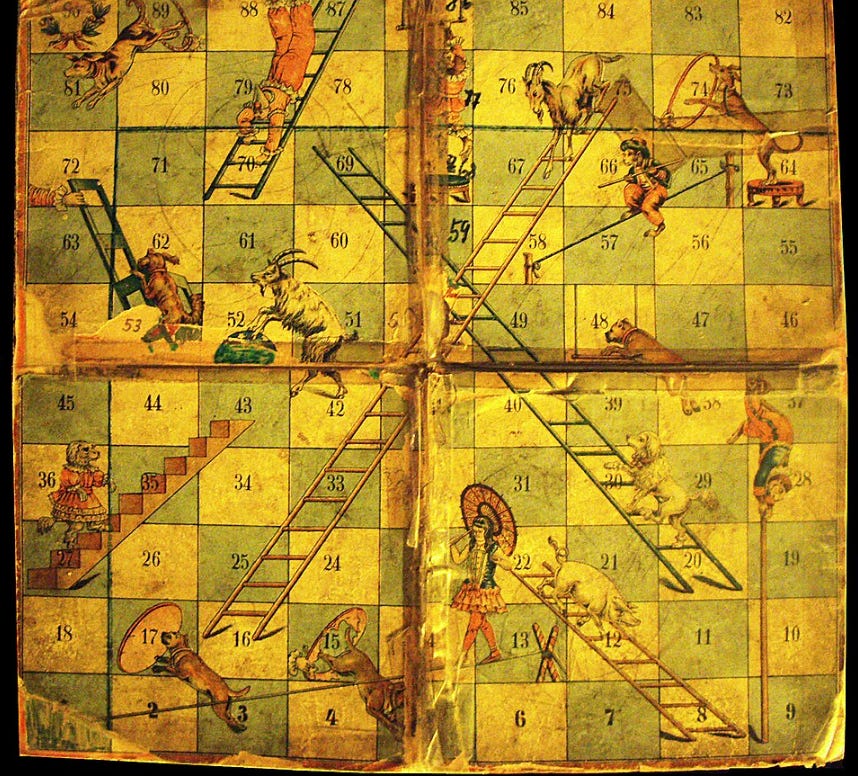
There is no strategy to Chutes and Ladders. Despite what I may have thought as a child, there was nothing I could do to avoid those traps. Every move was a matter of luck. Roll the dice and see where you may land. Some turns you were safe. Other times you just got caught in the trap.
I am almost certain that there is someone out there, someone in this world who has never played Chutes & Ladders but is living by its logic. They have been told that life is a game of luck. They will move through it gracefully, peacefully controlling their every step until the chutes catch up to them. They are dragged back down.
It is a hostile lifestyle that this person lives, one defined not by their actions but how they are acted upon. They may have just been caught in a string of bad economic circumstances, just as a record rate of young Americans are. They may have lost out on the job they had interviewed for just for the boss’ nephew to get hired. They may have just loved someone who left.
Maybe they were just caught in the heat of an action. The Kafka protagonist who gets caught for something he may not have done, something he may have forgotten about, or something that was so miniscule he has brushed away as a simple occurrence of habit. Or maybe it was the Camus protagonist who got caught committing a crime in broad daylight, a crime for which everyone around him seems to have an opinion on. Or maybe it’s even the Tolstoy protagonist caught in the midst of their love affair, having done nothing wrong but pursuing the feelings they have always known were more right than they were wrong.
But I am even more certain that there are more people that are not aware of this logic. Those that have lived by the logic that success is not defined by their chutes, or rather that their luck is simply better. There is peace in a game defined by something out of your control. And when there is peace, there is luck.
These two groups share something in common: they don’t want to get caught. The former simply doesn’t want to get caught up in the whims of life. They don’t want to wake up and realize that the chute was closer than it seemed, that the ladder was farther away, that their turn was just an inevitable delay of the gauntlet ahead. The latter just doesn’t want to get caught being lucky.
Because even if you are successful, you may not want to get caught doing what you do. Kafka’s protagonist was a prominent chief financial officer at a local bank. Tolstoy’s protagonists are career aristocrats, bouncing from palace to palace in search of each other.
Someone is always rolling the dice next to you, and the only thing worse than getting caught in a chute is watching them land on a ladder. There is no strategy to the game but the one. Don’t get caught. You might just be ok.
Hahhaha its a sadistic game, every time you play it, it just feels like you're physically holding your heart before it drops